 EN
EN

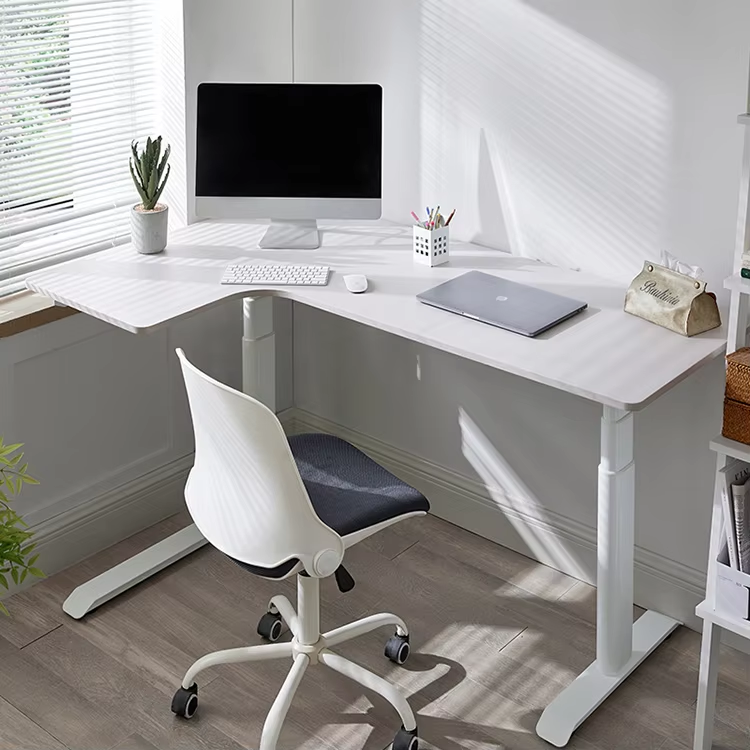
Core Design Trends in Modern Office Desks
The Rise of Minimalist Aesthetics in Office Interiors
These days, most offices are going for those sleek desk designs with straight lines, soft colors, and plenty of empty space on top. People seem to be getting tired of all that clutter. According to some research from last year, around 7 out of 10 workers said they could concentrate better when their workspace wasn't messy. Companies have caught onto this trend too. We're seeing lots of floating desks and thin profile workstations taking over office spaces these days. The old school heavy duty desks that took up so much room? Those are becoming harder to find as businesses try to maximize their square footage while still keeping things looking modern and professional.
How Modern Office Desk Designs Reflect Contemporary Work Culture
Modern office desks are all about being flexible enough for today's mixed work arrangements. Many come with parts that can be moved around or removed, such as monitor arms that pop off when not needed, plus desk tops that rearrange themselves depending on what someone needs to do at any given moment. This kind of setup really matters because roughly two thirds of companies have gone hybrid these days. Desks also tend to include built in storage compartments and wheels so they can roll from one spot to another easily. These features make sense in workplaces where people don't stick to the same desk every day anymore but instead share spaces throughout the building.
Key Drivers: Flexibility, Technology Integration, and Sustainability
Three factors define modern desk innovation:
- Flexibility: Adjustable-height mechanisms and mobile pedestals cater to diverse working postures and space constraints
- Technology integration: Built-in wireless charging pads and USB-C hubs now appear in 1 of 3 new desk installations
- Sustainability: Bamboo and recycled aluminum usage surged by 140% between 2020—2023, driven by corporate ESG goals
Manufacturers increasingly combine these elements, with 2024's bestselling models offering carbon-neutral production and IoT-enabled usage analytics—proving functionality and eco-consciousness aren’t mutually exclusive.
Ergonomic Office Desks for Health and Productivity
The Science Behind Ergonomic Office Furniture
The way modern office desks are designed actually follows some pretty important biomechanical rules that help cut down on muscle and joint strain by keeping people in more natural positions. A study done back in 2019 by the Sedentary Behavior Research Network found something interesting too sitting for long periods puts about 40% more pressure on the lower back than when someone is standing. That's why we see so many desks these days with height adjustments that match where our elbows naturally fall around 68 to 72 centimeters off the ground. And monitors placed at eye level make all the difference in preventing that annoying forward head tilt most office workers develop over time. These small but smart design choices really do contribute to better posture during those long hours at work.
Adjustable-Height and Standing Desks: Benefits and Usage Statistics
Adjustable-height desks now dominate 63% of U.S. corporate purchases (Gensler 2023 Workplace Survey), driven by proven productivity gains. Employees using sit-stand desks report:
- 14% fewer headaches (CDC Study 2022)
- 23% higher task persistence in afternoon work blocks
- 87% agreement on improved mood during standing intervals
Case Study: Reduced Back Pain in Employees After Switching to Height-Adjustable Desks
A 12-month analysis of 460 office workers revealed switching to adjustable desks reduced lower back pain reports by 42% (Ergonomics International Journal, 2023). Participants averaging 3.1 daily posture changes showed stronger core engagement (EMG data +31%) and 19% fewer physical therapy claims compared to fixed-desk users.
Long-Term Health ROI of Investing in Ergonomic Office Desk Solutions
For every $1 spent on ergonomic office furniture, companies see $3.22 in reduced absenteeism and healthcare costs over 3 years (Nielsen Workplace Wellness Report). This return stems from 27% fewer repetitive strain injuries, 15% faster task completion times, and 34% lower turnover in departments with high ergonomic scores.
Materials and Aesthetics: Matching Desks to Modern Office Decor
Comparing Glass, Metal, Wood, and Bamboo in Modern Office Desk Construction
Modern office desks leverage material properties to balance form and function:
| Material | Key Attributes | Ideal Applications |
|---|---|---|
| Glass | Reflective surfaces, spatial lightness | Collaborative tech-focused offices |
| Metal | Structural integrity, industrial edge | Startups, creative workspaces |
| Wood | Natural warmth, sound absorption | Law firms, executive suites |
| Bamboo | Renewable growth, tensile strength | Eco-conscious organizations |
Glass-metal hybrids dominate progressive workspaces, offering contrast between transparency and industrial rigor. Wood remains popular for its psychological warmth, with 62% of HR managers linking natural materials to reduced workplace stress.
Sustainable and Eco-Friendly Materials Gaining Market Share
Bamboo adoption grew 28% year-over-year in corporate furniture procurement, outperforming traditional hardwoods in durability tests. Recycled aluminum surfaces now account for 17% of metal desk production, reducing manufacturing emissions by 41% compared to virgin materials (Circular Economy Institute 2023). Manufacturers achieve LEED compliance through FSC-certified wood composites and water-based adhesives.
Achieving Clean Lines and Minimalist Style with Floating and Wall-Mounted Desks
According to a recent study from Space Optimization (2023), floating desks actually cut down on visual mess by around 73% when compared to those old school pedestal desks we all know. When it comes to wall mounted setups, they save roughly 11.4 square feet per desk spot in those big open office spaces without sacrificing any of the cable management features workers need. The design really fits right in with the whole Scandinavian minimalism vibe going on these days. Most models come with hidden storage areas, built in pathways for wires, and those nice matte surfaces that don't show fingerprints so easily. This combination makes for workspaces that look clean and modern while still getting the job done efficiently in today's mixed environment workplaces.
Smart Technology Integration in Office Desks
Cable Management and Built-In Tech Features as Modern Standards
Today's office desks are all about keeping things tidy with built in cable management solutions since messy wires really get in the way of getting work done. According to the 2023 Workspace Tech Survey, almost three quarters of workers say tangled cords hold them back from being productive. Most desks come equipped with power strips built right into them, those handy grommet holes for routing cables through, plus channels underneath where wires can hide out of sight. And let's not forget about those wireless charging spots that mean fewer cords lying around everywhere. Big furniture companies are even starting to include these universal power hubs that work with different voltage standards around the world, so employees traveling between offices don't have to worry about finding compatible outlets when they need to charge their devices quickly during meetings.
Wireless Charging, USB-C Hubs, and Power Integration in Smart Desks
USB-C is becoming the standard these days, with around 89% of laptops switching over since 2022. This trend has pushed manufacturers to build multi-device charging stations right into their desk designs. According to a survey from last year, about two thirds of people who work from home sometimes still want desks that come with wireless charging spots and proper places to dock their gadgets. Some newer models go even further, offering separate charging areas that recognize what kind of device they're powering. These smart charging zones adjust how much electricity goes out so devices charge properly without getting too hot, which makes them safer for everyday use on office desks everywhere.
IoT-Enabled Desks: Monitoring Posture, Usage, and Workspace Efficiency
Modern office desks come equipped with embedded IoT sensors that monitor various aspects of worker health and productivity. These smart desks can detect when someone's sitting posture goes beyond what OSHA considers safe angles, keep tabs on how long people stare at screens, and even remind them to take breaks automatically. They also track who sits where and for how long, which helps companies manage shared workspaces better. According to an Ergonomic Impact Study released last year, businesses implementing these IoT enabled desks saw around a 40 percent drop in cases of repetitive strain injuries thanks to those real time alerts. Plus there's motion sensing tech for lights and temperature control too. This not only makes each person's workspace feel more personalized but saves companies money as well since it cuts down on wasted electricity by approximately 22% every year.
Are Smart Desks Over-Engineered or Essential for Future-Ready Offices?
Some people complain that all these smart features just make things harder to maintain, but according to a recent study, around two thirds of IT managers actually see fewer support requests when their offices have desks integrated with technology for peripheral connections. Looking at the same 2023 research data, teams working with automated desks experienced roughly a third increase in productivity compared to those stuck with old fashioned models. With video conferencing and other remote work tools getting better all the time, these desks acting as central connection points are becoming really important rather than being overkill. They help connect what happens face to face with everything digital going on at the same time.
Modular and Multi-Functional Desk Configurations for Flexible Workspaces
The Shift Toward Modular Furniture in Agile and Hybrid Work Environments
Office desks today are changing fast to keep up with how people actually work now. According to Workspace Strategy Report from 2024, around 7 out of 10 companies have started investing heavily in modular desk systems that can handle those tricky hybrid work schedules we all deal with. Think about it mobile storage units, walls that can be moved around, and desks that go up and down let workers switch their workspace from solo projects to team meetings almost instantly. The real problem most offices face right now is getting enough room for different kinds of work at the same time. People need space for deep concentration which takes up about 37% of what they do daily, but also need areas where groups can come together for creative sessions something that happens roughly 29% of the week according to industry data.
L-Shaped, Curved, and Convertible Desks for Collaboration and Space Optimization
Workspaces that break away from traditional straight lines are shrinking office space needs by around 18 to 22 percent at the same time making it easier for teams to interact. The curved shapes help people see each other better when they're talking, which matters a lot in meetings. Then there's the L shape arrangement that gives workers separate spots for their second screen setup and papers they need to reference. Some desks can actually transform too flipping up surfaces or sliding parts let folks switch quickly between working alone and collaborating on ideas. This flexibility is really important these days since almost half (about 42%) of office workers spend part of their day at their desk and part moving around the building.
Multi-Functional Workstations Adapting to Evolving Office Needs
Top furniture makers are starting to combine things like vertical storage options, built-in cable organizers, and even integrated seating areas right into their office desk designs, creating complete workstations that handle multiple needs at once. According to research from last year, businesses that switched to these all-in-one setups saw their moving expenses drop by about 60 percent when departments had to be rearranged. The real advantage comes for companies running flexible offices where teams might need to completely change how they operate every three months or so without tearing up walls or spending thousands on new infrastructure. Many startups have already made this shift simply because it makes financial sense in the long run.
FAQs
What are the key trends in modern office desks?
The main trends include minimalist aesthetics, flexibility, technology integration, and sustainability, along with ergonomic designs that promote health and productivity.
How do modern desk designs support hybrid work models?
Modern desks often include movable or removable parts, built-in storage, and wheels to facilitate easy adaptation to hybrid work environments where mobility and flexibility are crucial.
What materials are commonly used in modern office desks?
Common materials include glass, metal, wood, and bamboo, chosen for their aesthetic and functional properties suitable for various office settings.
How do ergonomic desks contribute to workplace health?
Ergonomic desks reduce strain and improve posture by allowing height adjustments and positioning monitors at eye level, contributing to lower rates of musculoskeletal issues.
What smart features are integrated into modern office desks?
Smart features include built-in cable management, wireless charging, USB-C hubs, IoT sensors, and power integration to enhance productivity and workspace efficiency.