 EN
EN

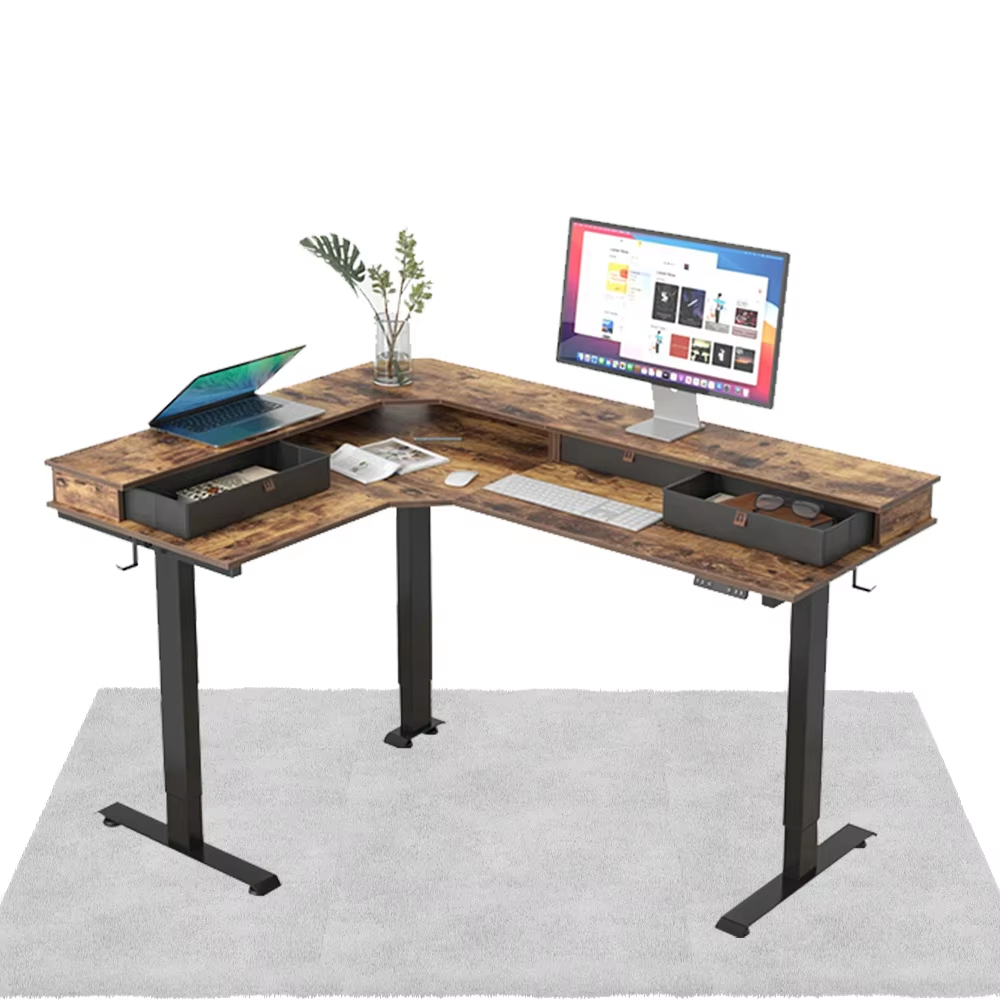
Ergonomic Fit: Prioritizing Health and Posture with the Right Office Desk
Optimal desk dimensions (height, width, depth) for neutral posture and movement
Getting the right dimensions for an office desk matters a lot for keeping our bodies healthy. When sitting at a desk, the best height puts those elbows around 90 degrees while typing. This stops shoulders from getting too high which can really stress out those trapezius muscles. Most regular desks sit between 28 inches and 30 inches tall, but adjustable ones work better because they fit different body sizes and let people move around during their day. The desk needs to be deep enough too. At least 30 inches gives space so monitors can stay about arm's length away from the eyes, cutting down on strain and letting someone shift positions now and then without discomfort. If someone has two monitors, the desk should be at least 60 inches wide to prevent twisting the neck too much. Twisting over 30 degrees repeatedly adds up to serious neck problems over time. Workspaces that don't meet these standards put workers at about 40% higher risk for injuries according to recent OSHA guidelines on workplace ergonomics.
| Dimension | Ideal Range | Health Impact |
|---|---|---|
| Height | 28"–30" | Prevents shoulder/elbow strain |
| Depth | 30"–36" | Supports neutral neck posture |
| Width | 48"–72" | Reduces repetitive torso rotation |
How poor office desk ergonomics contribute to musculoskeletal strain and fatigue
When office desks aren't set up properly, they create ongoing stress on the body's mechanics. A desk even 2 inches too high adds about 15 extra pounds of pressure on the neck area according to research from Cornell Ergonomics last year, which speeds up wear and tear on spinal discs over months or years. Desks that don't give enough space for legs push knees into awkward positions under 90 degrees, squeezing the lower back and slowing blood flow through the region. This contributes heavily to back pain problems, with most people suffering from it reporting similar issues. If a desk isn't wide enough either, workers end up stretching repeatedly outside their comfortable range. This puts unnecessary strain on shoulder muscles and increases chances of developing carpal tunnel symptoms by around three times what it should be. All these small injuries build up over time and lead to tired thinking patterns too. People working at poorly designed workstations tend to feel mentally exhausted about 23 percent more than those with good ergonomics, per a recent study published in the Journal of Occupational Health.
Desk Type and Functionality: Matching the Office Desk to Your Workstyle
Selecting the right office desk means aligning its design with your core work activities—not just aesthetics or available space. Four primary types serve distinct functional needs:
- Standing desks reduce sedentary strain and have been shown to cut lower back pain by 54% with consistent use (Ergonomics Journal, 2023).
- L-shaped desks leverage corner space efficiently, supporting simultaneous tasks like video conferencing and document review.
- Executive desks provide expansive, stable surfaces ideal for paper-heavy or client-facing roles requiring frequent spread-out workflows.
- Compact desks offer agility for home offices, hot-desking environments, or secondary workspaces where footprint is constrained.
| Desk Type | Best For | Key Limitations |
|---|---|---|
| Standing | Health-focused users | Higher initial cost |
| L-shaped | Collaborative or multitasking roles | Requires larger floor area |
| Executive | Paper-intensive or leadership workflows | Limited adaptability for tech upgrades |
| Compact | Small spaces or ad-hoc work | Minimal accessory or peripheral support |
Critical functionality features: cable management, dual-monitor readiness, and modularity
When looking at desks beyond just their appearance and dimensions, there are actually three main factors that determine how useful they stay over time. Cable management built right into the desk helps keep things tidy and safe from tripping hazards which studies show causes around 30% of all damage to office gear according to Facility Management Report from last year. For people who work with two monitors, the desk needs to be wide enough (at least 55 inches works well) and have strong grommets plus good structural support since those extra monitors put quite a load on the desk frame. This matters a lot for folks like analysts, designers, and software developers who spend hours staring at screens. And then there's modularity too. Desks that come with optional attachments for CPUs, adjustable monitor arms, or additional drawers tend to last longer because workers can customize them as needs change rather than buying entirely new workstations every few years. Companies that focus on these design aspects generally find their employees need to tweak their setups 40% less often throughout the year to keep everything ergonomically correct.
Material, Durability, and Budget: Selecting a Long-Term Office Desk Investment
Laminate, solid wood, steel, and sustainable composites—trade-offs in cost, longevity, and aesthetics
Material choice shapes not only appearance and price but also resilience under daily use. Each option balances distinct advantages:
| Material | Cost Range | Durability | Aesthetic Appeal |
|---|---|---|---|
| Laminate | $200–$500 | Moderate (5–7 years) | High variety, modern |
| Solid Wood | $800–$2,500+ | Exceptional (15+ years) | Timeless, warm |
| Steel | $600–$1,200 | Maximum (20+ years) | Industrial, minimalist |
| Sustainable Composites | $400–$900 | Variable (7–12 years) | Contemporary, eco-forward |
Laminate is great for getting good looks at affordable prices, but it tends to show scratches and dents pretty quickly, especially along the edges where people naturally grab things. Solid wood furniture lasts generations if cared for properly and feels warm to touch, but needs regular oiling or waxing to protect against water damage and bumps. Steel frames hold up well when subjected to heavy weights and constant use, although those visible weld lines can sometimes restrict what designers want to create. Eco friendly options made from old plastic bottles, bamboo scraps, or leftover farm products are becoming popular because they look good while doing some good for the planet too. How long these composite materials last really depends on how dense the core material is and whether there's proper protection on top. Going for stuff that stands the test of time and can be fixed instead of thrown away cuts down on buying new items by about 40 percent after ten years. That means saving money while helping keep landfills from overflowing with cheap throwaway furniture.
Space Optimization and Integration: Fitting the Office Desk into Real-World Environments
Good space planning begins with accurate measurements beyond just floor dimensions. We need to consider how people move around, where doors swing open, and where power outlets and data connections are located. Leaving about 3 feet of space behind chairs makes all the difference when someone needs to stand up or move their chair around. Small spaces benefit greatly from L-shaped workstations or those mounted against walls since they utilize corners effectively without taking up extra room. Storage solutions that go vertical instead of horizontal save precious floor area too think about overhead shelves or drawers underneath desks. For offices with lots of glass and natural light, positioning desks so workers face away from windows helps them take advantage of daylight without dealing with annoying reflections on screens. Flexible furniture options matter a lot these days. Things like attachable desk extensions or movable bases let teams rearrange things quickly as projects change or new members join. And dont forget about electricity! Mapping out where power is available and planning how cables will run should happen early on in the process. Otherwise we end up cutting holes in walls or running unsightly cords across floors after everything else is already set up.
FAQ Section
What are the ideal dimensions for an ergonomic desk setup?
The ideal desk height is between 28" and 30" to prevent shoulder and elbow strain. The depth should be at least 30" to support neutral neck posture, while the width should be between 48" and 72" to reduce repetitive torso rotation.
How can I optimize a desk for dual monitor use?
Ensure your desk is wide enough, at least 55 inches, and includes strong grommets and structural support to handle the load of extra monitors.
What types of desks are available for different workstyles?
There are four primary types of desks: standing, L-shaped, executive, and compact, each offering distinct functionalities for health, multitasking, paper-heavy, and space-constrained roles.
What materials are best for long-term desk durability?
Solid wood and steel offer exceptional durability, lasting over 15 years and 20 years respectively. Laminate and sustainable composites vary in durability and cost-effectiveness.
How can office desks be optimized for small spaces?
L-shaped workstations or wall-mounted desks can optimize space in small areas, along with vertical storage solutions and efficient power planning.
Table of Contents
- Ergonomic Fit: Prioritizing Health and Posture with the Right Office Desk
- Desk Type and Functionality: Matching the Office Desk to Your Workstyle
- Material, Durability, and Budget: Selecting a Long-Term Office Desk Investment
- Space Optimization and Integration: Fitting the Office Desk into Real-World Environments
- FAQ Section